
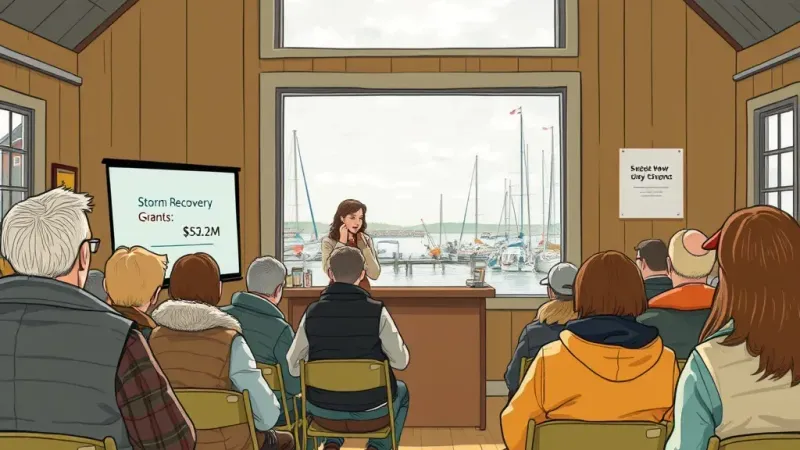
Maine Morning Star reported that the first ever Maine Working Waterfront Conference was held in Bar Harbor Thursday and Friday. The multi-day gathering focused heavily on the state of local marine industries, regional infrastructure needs, and the lingering challenges stemming from severe weather events. Attendees and organizers discussed the extensive damage experienced by coastal communities and examined the various ways financial assistance is being deployed to aid in the comprehensive recovery process across the state of Maine.
A major focus of the announcements during the convening was the financial relief directed toward affected regions. Specifically, Maine communities receive twenty-five million two hundred thousand dollars in storm recovery grants. These vital funds are tied directly to the Working Waterfront Resiliency Grant Program, which was launched in the spring of twenty twenty-five. The grant program was designed to help shorefront properties and marine-dependent businesses rebuild and reinforce their structures against future extreme weather occurrences.
Throughout the conference sessions held in Bar Harbor on Thursday and Friday, participants reflected on the sudden and overwhelming nature of the storm damage. Expressing the emotional and physical toll of the disaster, Amity Chipman told Maine Morning Star, "We put a lot of work into that, and in a quick second, it was gone." This personal account underscored the precarious reality facing many waterfront operators who depend on fragile coastal structures to conduct their daily business operations.
Providing a vivid technical description of how the severe weather dismantled local infrastructure, Amity Chipman told Maine Morning Star, "We lost the wharf about an hour before high tide, and basically, what happened was the surf took the building on the end first, and then it just lifted up the wooden structure, the whole thing like a raft, just came off from the pilings." This dramatic narrative illustrated the immense power of the storm surge, which overwhelmed traditional coastal defenses and completely detached heavy timber frames from their foundations.
As the first ever Maine Working Waterfront Conference drew to a close in Bar Harbor, attendees looked toward a challenging road ahead. The combination of the newly highlighted twenty-five million two hundred thousand dollars in storm recovery grants and the implementation of the Working Waterfront Resiliency Grant Program launched in the spring of twenty twenty-five represents a significant step forward. Yet, as the powerful testimonies shared during the event made clear, the physical and economic scars left by the storms will require sustained attention and resources from communities throughout Maine.